Leaders Link Virtuous Upbringing of Children to End of Corruption
By Teresia Muia
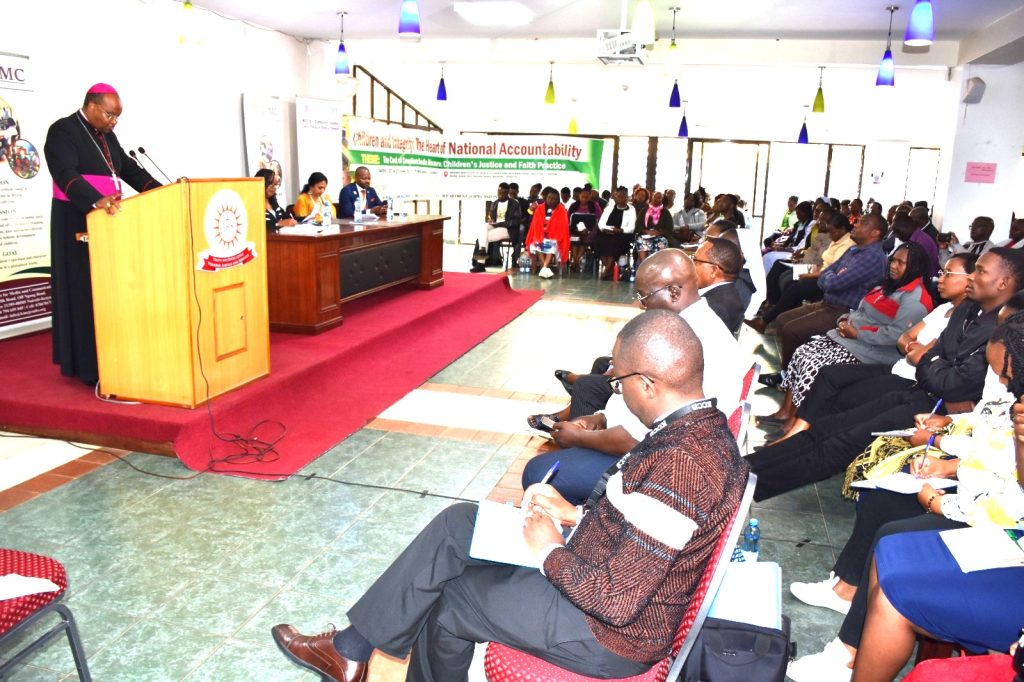
Teaching children about goodness and respecting them as they deserve could be the lasting solution to corruption in Kenya, according to speakers at the National Conference 2025 held on October 22–23 at the Hekima Institute of Peace Studies and International Relations (HIPSIR) off Ngong Road, Nairobi. The two-day conference, organized by the Loyola Centre for Media and Communications (LCMC) in collaboration with the
Inter-religious Council of Kenya (IRCK) and the Catholic Justice and Peace Department, brought together faith leaders, policymakers, and children’s rights advocates under the theme “The Cost of Corruption: Media Discourses, Children’s Justice, and Faith Practice.” Among the prominent speakers were Archbishop Anthony Muheria of the Nyeri Archdiocese, Busia Senator Okiya Omtatah, Media Council of Kenya CEO David Omwoyo, and representatives from the Commission on Administrative Justice (Ombudsman), the Ethics and Anti-Corruption Commission, and other child safeguarding organizations. Speaking during the conference, Archbishop Muheria emphasized that the fight against corruption must begin in the family. “The first system to consider in combating the disease of corruption is the family. Parents, as the first teachers, must model positive actions such as acts of charity, mercy, and righteousness. The first thing is not to preach against corruption — it is to preach about goodness, which we rarely do,” he said. “We must speak positively about what is right and sell the good to our children. That is how we magnetize the young people of our country.” The Archbishop called on faith leaders and parents alike to nurture goodness as an antidote to corruption. He proposed a threefold plan: rediscovering conscience through Christian courage, upholding truth, and making a moral commitment to do what is right. Echoing this message, Senator Omtatah urged society to treat children with dignity, describing them as a reflection of the nation’s moral standing. “We treat children as if they are not human beings — yet they are the purest measure of our humanity. We must stop prospecting children — they are not our investments; they are our inheritance,” he said. The senator condemned cultural practices that demean children and called for a collective mental shift to empower and respect them as a foundation for building responsible, ethical citizens. The National Conference 2025 reaffirmed that shaping morally upright children through love, respect, and positive example could be Kenya’s most effective weapon in dismantling corruption.: LCMC AOR NEWS UPDATESGenerational Divide Threatens Synodal Vision of Inclusive “Circular Church”
By Teresia Muia
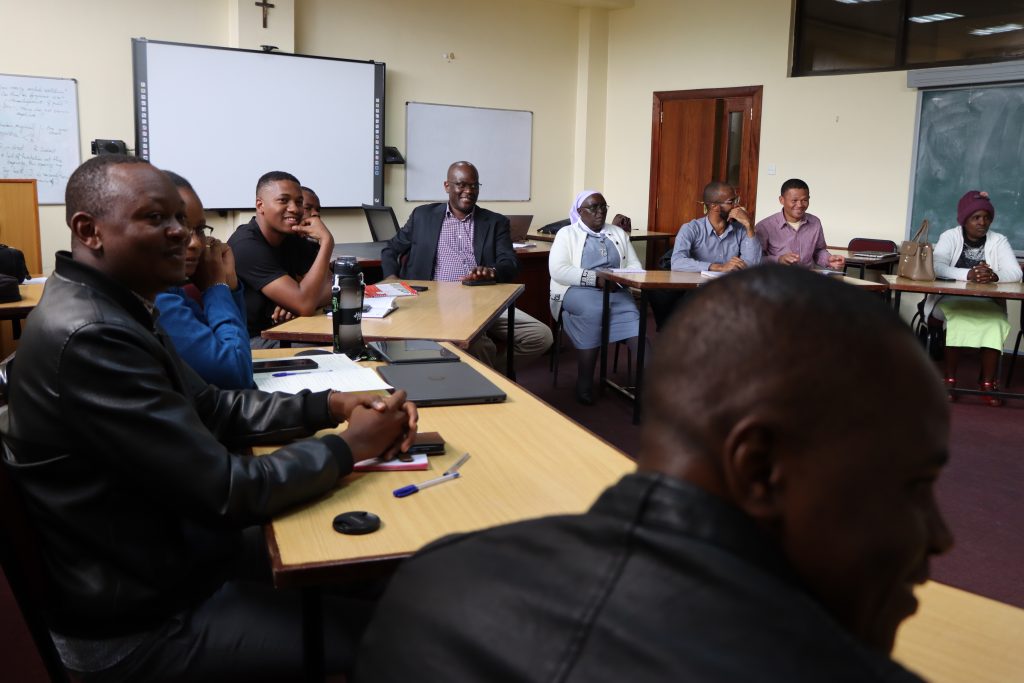
At a recent workshop in Hipsir, ecumenical leaders from Tangaza University confronted a growing tension that could stall the Church’s bold vision for shared leadership, namely the clash between tradition-bound elders and the freedom-seeking younger generation. As the Church strives to become a truly inclusive “Circular Church,” this generational fault line threatens to break apart the foundation of participation and unity the synod
seeks to create. At a recent workshop in Hipsir, ecumenical leaders from Tangaza University confronted a growing tension that could stall the Church’s bold vision for shared leadership, namely the clash between tradition-bound elders and the freedom-seeking younger generation. As the Church strives to become a truly inclusive “Circular Church,” this generational fault line threatens to break apart the foundation of participation and unity the synod seeks to create.On August 16th, 2025, thirty-three ecumenical leaders gathered for a reflective session that brought these underlying tensions into sharp focus. Facilitated by Dr. Elias Mokua SJ, Sr. Elisabeth Nziwa of the Catholic University of Eastern Africa, and Ms. Teresia Muia from Loyola Centre for Media and Communications, the session centered on the Final Synod Document. Together, they explored the synod’s call for a Circular Church; one rooted in inclusivity, shared decision-making, and mutual respect across generations. A major part of the discussion delved into the complex tensions between generations within formation houses and beyond. The participants identified several critical issues fueling the divide. The older generation tends to prioritize rigidity, deeply valuing tradition, strict hierarchies, and clerical titles. Conversely, the younger generation pushes for flexibility, open dialogue, and more equal relationships that question traditional authority structures.
This clash leads to profound differences in communication styles and approaches to freedom and authority. Younger members express a strong desire for greater freedom and openness in discussions, while older leaders often hold firm to authoritative methods, creating frequent misunderstandings and conflict. These tensions also intersect with an identity crisis among younger Church members who struggle to define their role in the Church and society at large.
Such generational discord presents a tangible threat to the synodal vision. The attachment to hierarchy and tradition by older members may alienate the youth, risking fragmentation when unity and mutual respect are most needed. Without addressing these divides, the Church could find itself unable to fully embody the Circular Church ideal—one where every voice matters and collaborative mission drives the community forward.
The workshop underscored the urgent need for dialogue that bridges the generational gap, fostering respect for both tradition and innovation. Only by embracing this challenge can the Church move closer to its goal of creating a truly participatory, mission-focused community that honors all its members’ contributions.: LCMC AOR NEWS UPDATES
‘Prick the conscience of those who make decisions’ _ Bishop Willybard Lagho.
By Sr. Lydia Okanga
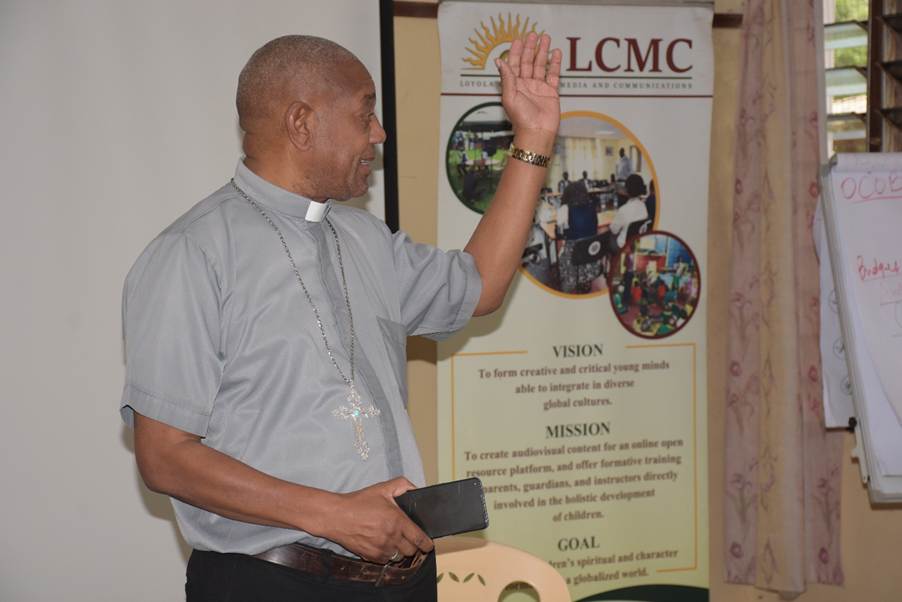
The Loyola Centre for Media and Communications (LCMC) has continued to empower citizens of Malindi Diocese with practical knowledge on Kenya’s budgeting process, devolution, and the fight against corruption. In a training organized in partnership with the Catholic Diocese of Malindi, LCMC brought together clergy, religious, and members of the Catholic Justice and Peace
Department (CJPD) to strengthen their role in holding leaders accountable. Speaking at the forum, Rt. Rev. Willybard Lagho, Bishop of Malindi, issued a bold call for integrity in public life. “Corruption begins with you and me, so we must find ways of pricking the conscience of those who make decisions,” he said. The bishop further emphasized that while individuals must resist corrupt practices, the government has a duty to set up strong monitoring systems in procurement processes. He urged the Church and Catholic groups to ensure leaders are accountable to the people. The bishop acknowledged that it is really challenging to address corruption in our environments but expressed hope that if conscience is awakened we can overcome it gradually.LCMC facilitators anchored the training on Catholic social teaching and practical civic education. Rev. Fr. Dr. Odomaro Mubangizi, SJ, reminded participants that faith should remain at the centre of the efforts to promote justice, while Denson Machuki broke down the actual cost of corruption illustrating what one billion shillings could achieve if properly spent on health, education, and infrastructure. He also introduced the “fraud triangle,” explaining how pressure and opportunity, fuel corrupt practices. Kilifi County Budget Facilitator Eric Karisa Mgoja urged participants to actively engage in the budget process at the county level. He warned that the national government’s bid to centralize tax collection could undermine devolution and weaken fiscal autonomy. Highlighting key stages of the budget cycle from budget formulation to budget oversight, he stressed the importance of citizen participation in planning documents such as the Annual Development Plan, Fiscal Strategy Paper, and Budget Estimates. Mgoja commended LCMC for spearheading the initiative and challenged the clergy and the Church at large to lead the fight against divisive politics, negative ethnicity, and poor governance. “This is our agenda: to hold leaders accountable and choose those who can move us forward,” he said. “Devolution works best when leaders respect the Constitution and prioritize the people.”
The training underscored LCMC’s commitment to building an informed public, equipping the Malindi Diocese to take decisive steps in combating corruption, particularly in critical areas such as the procurement of medical supplies.: LCMC AOR NEWS UPDATES